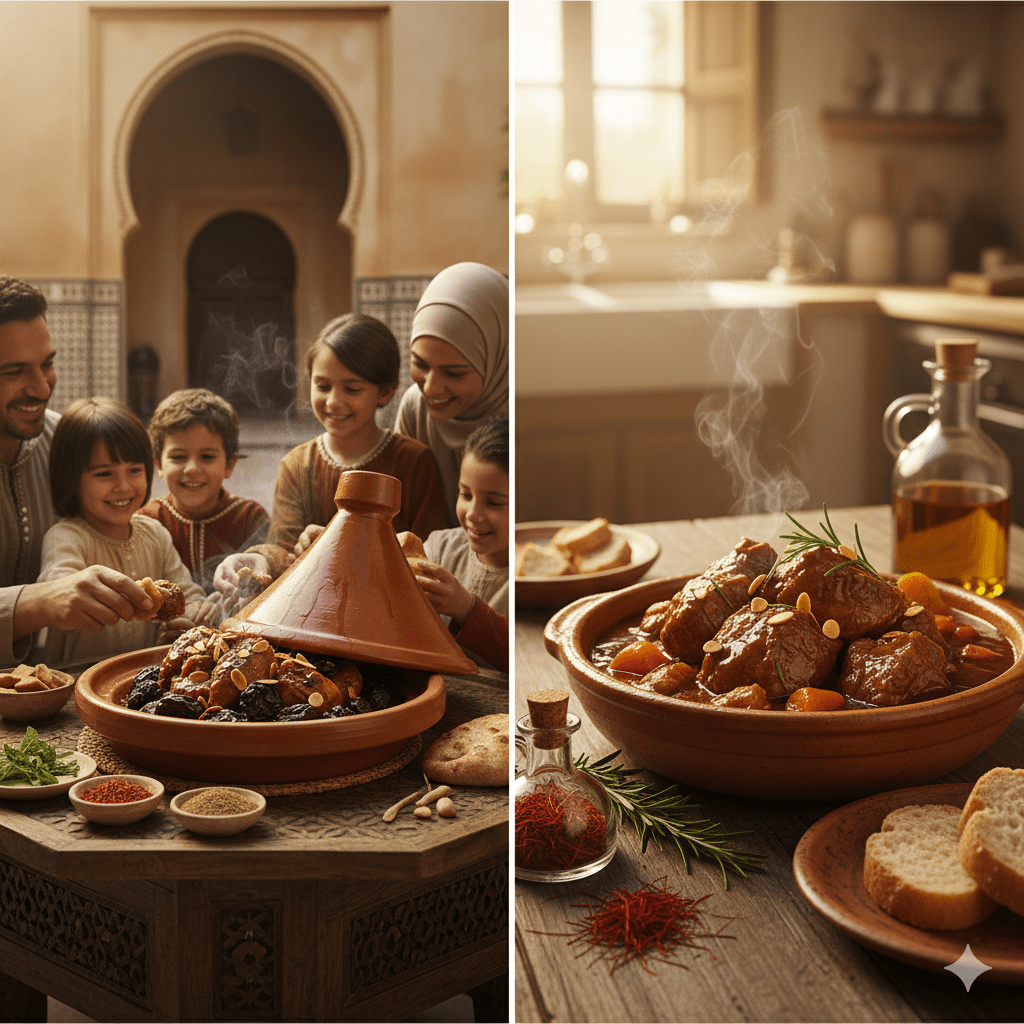
The Tale of Two Shores (两岸的故事)
One of the most delicious threads connecting Spain and Morocco is the story of the Lamb and Prune Tagine (Mrouzia). It is more than just a stew; it is a culinary map of the medieval Mediterranean.
西班牙和摩洛哥之间最美味的纽带之一,便是羊肉西梅塔吉锅 (Mrouzia) 的故事。它不仅仅是一道炖菜;它更是中世纪地中海地区的一张美食地图。
The story begins during the Al-Andalus period (8th–15th centuries), when the borders between what we now call Spain and Morocco were practically nonexistent. Travelers, scholars, and cooks moved freely across the Strait of Gibraltar, carrying spices and techniques with them.
这个故事始于安达卢斯时期(8-15世纪),当时我们现在所称的西班牙和摩洛哥之间的边界实际上是不存在的。旅行者、学者和厨师们自由地穿梭于直布罗陀海峡两岸,随身带着香料和烹饪技术。
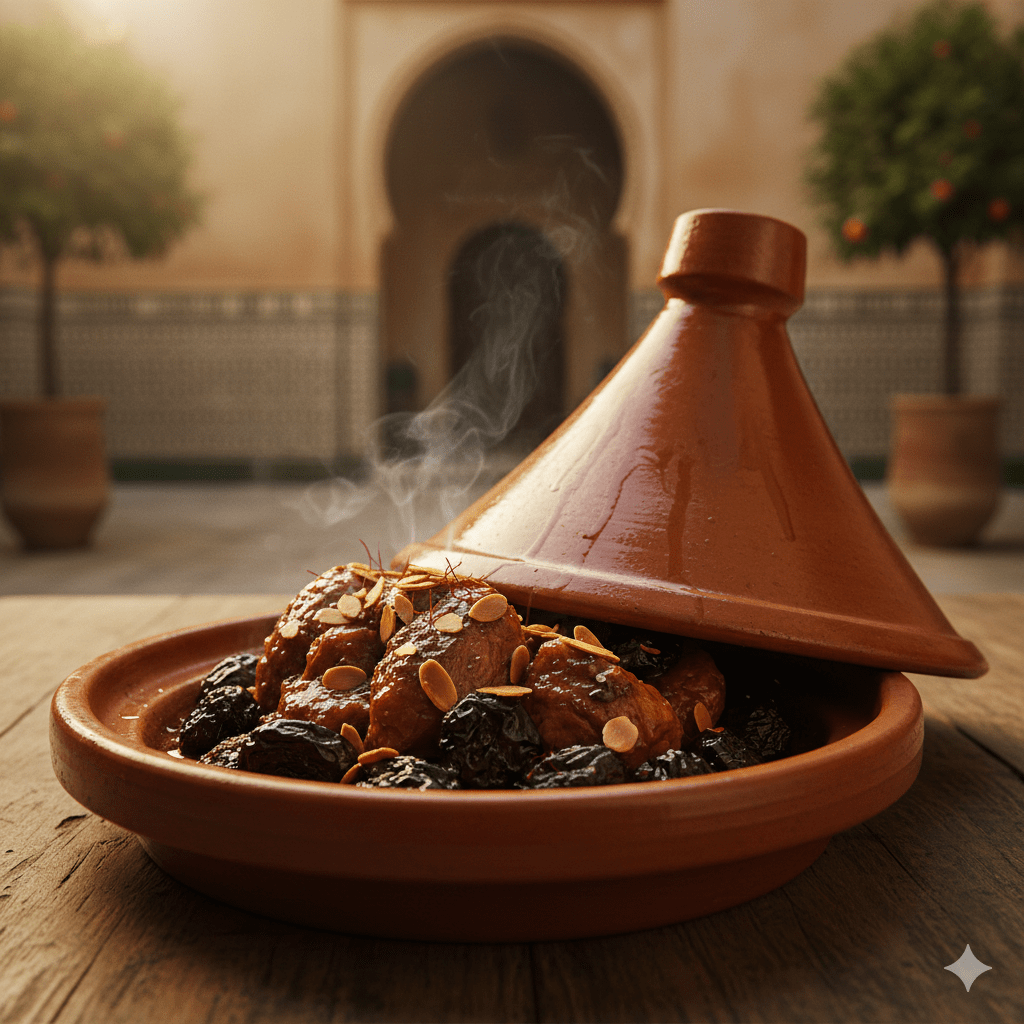
The Clay Vessel (陶制器皿)
The word tagine refers to the conical clay pot that is the hallmark of Moroccan slow-cooking. In the arid regions of North Africa, water was a luxury. The tagine was a masterpiece of engineering: the cone traps steam, condenses it, and drips it back onto the food, allowing meat to become tender with very little added liquid.
“塔吉锅”(tagine)指的是摩洛哥慢炖料理的标志性圆锥形陶制器皿。在北非干旱地区,水是一种奢侈品。塔吉锅是一项工程杰作:圆锥形盖子能锁住蒸汽,使其冷凝后滴回食物中,让肉类只需极少量的液体就能变得酥烂。
The Spanish Connection: “Agrodolce” (西班牙联系:“甜酸口味”)
While the pot is Berber (Amazigh) in origin, the flavor profile of the most famous festive tagine—Lamb with Prunes and Honey—is a direct inheritance from the culinary golden age of Al-Andalus.
虽然塔吉锅起源于柏柏尔人(阿马齐格人),但最著名的节日塔吉锅——羊肉西梅蜂蜜塔吉锅——的风味,则是安达卢斯烹饪黄金时代的直接传承。
The Moors in Spain perfected the art of agrodolce (sweet and sour). They introduced the irrigation systems that allowed almond and citrus trees to flourish in the Iberian Peninsula. In the royal kitchens of Córdoba and Granada, they began pairing savory meats with dried fruits (like prunes and apricots) and honey—a style that eventually became a signature of Moroccan high cuisine.
摩尔人在西班牙完善了**甜酸口味(agrodolce)**的烹饪艺术。他们引入了灌溉系统,使得杏仁树和柑橘树在伊比利亚半岛蓬勃生长。在科尔多瓦和格拉纳达的皇家厨房里,他们开始将咸味肉类与干果(如西梅和杏干)和蜂蜜搭配——这种风格最终成为摩洛哥高级烹饪的标志。
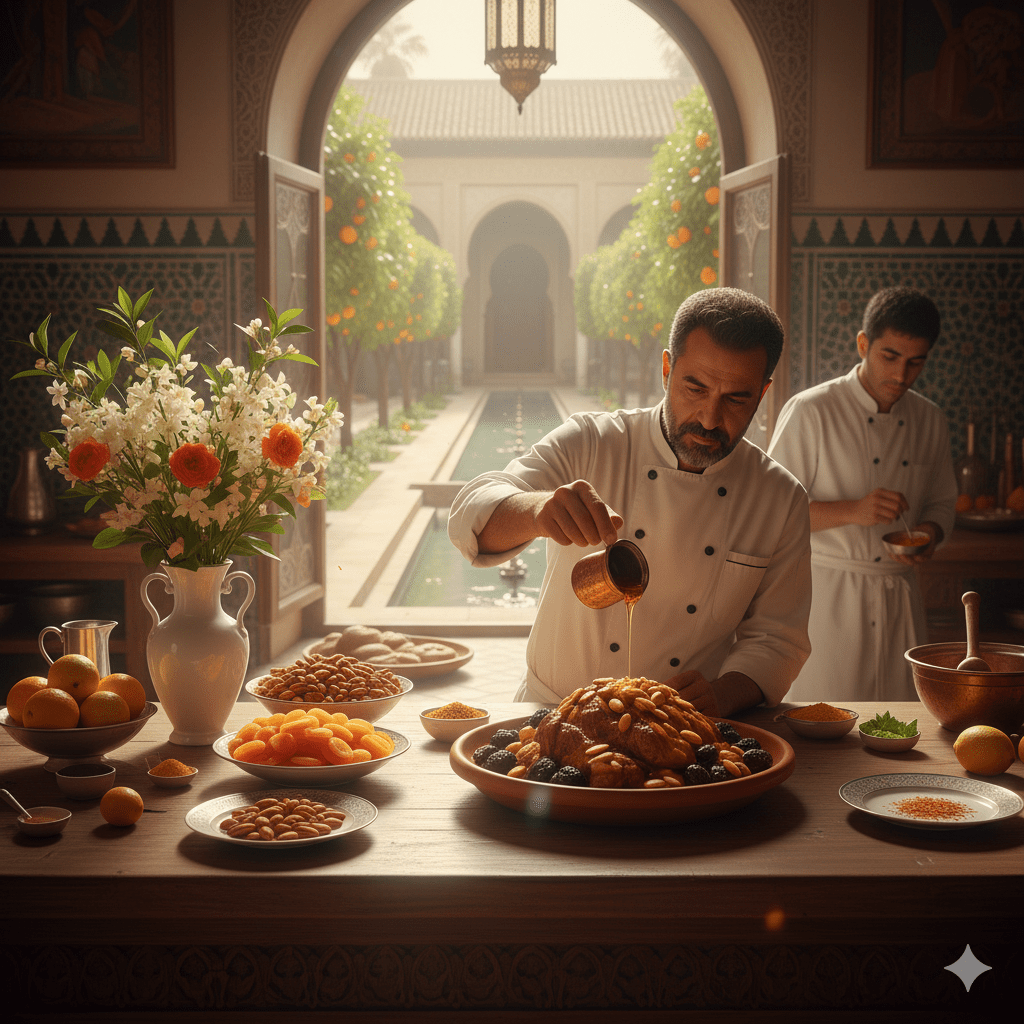
The Culinary Legacy (烹饪遗产)
When the Reconquista ended and many Muslims and Sephardic Jews migrated from Spain to Morocco, they brought these refined recipes with them. Today, the relationship is mirrored in two iconic dishes:
随着“收复失地运动”的结束,许多穆斯林和塞法迪犹太人从西班牙迁徙到摩洛哥,他们也带来了这些精致的食谱。如今,这种联系体现在两道标志性菜肴中:
• In Morocco (在摩洛哥): The Mrouzia tagine remains a staple of Eid al-Adha, heavily spiced with Ras el Hanout, ginger, and saffron, topped with fried almonds and honeyed prunes.
• Mrouzia 塔吉锅至今仍是宰牲节的主食,用Ras el Hanout香料、姜和藏红花重重调味,上面撒上炸杏仁和蜜饯西梅。
• In Spain (在西班牙): You can still find the echo of this relationship in dishes like Estofado de Cordero or certain Andalusian honey-glazed meats. Even the Spanish word for oil, aceite, and saffron, azafrán, come directly from the Arabic used by those early tagine-makers.
• 在西班牙,你仍然可以在像 Estofado de Cordero(炖羊肉)或某些安达卢西亚蜜汁肉类等菜肴中找到这种联系的 echoes。甚至西班牙语中“油”(aceite)和“藏红花”(azafrán)的词汇都直接来源于早期塔吉锅制作者所使用的阿拉伯语。